How Flooring Decisions Impact Facility Turnover Time

Ronell Moore
Owner, 180 Degree Floors & Moore
Facility turnover time—the interval between one use cycle and the next—is one of the most overlooked factors in commercial flooring decisions. Property managers often evaluate flooring purely on aesthetics and material cost, missing the operational impact that the wrong system can have on revenue and scheduling. In hospitality and multifamily environments, every day a space is offline represents measurable lost income.
Consider a 200-key hotel renovation. If 40 rooms are taken offline simultaneously for a traditional glue-down flooring installation, each room averaging $179/night, the property loses $7,160 in potential revenue per day. A two-week installation timeline for that block represents over $100,000 in lost room revenue—before accounting for the cost of the flooring itself.
Traditional flooring installations extend downtime through multiple bottlenecks. First, the existing flooring must be demolished and removed. Then the subfloor requires preparation—grinding, leveling, and moisture testing. Once adhesive is spread, it needs 12 to 24 hours of open time before planks can be set. After installation, many adhesive systems require another 24 to 72 hours of cure time before the floor can accept furniture and foot traffic.
Modern loose lay systems compress this timeline dramatically. Because there is no adhesive, there is no cure time. Planks can accept foot traffic immediately after placement, and furniture can be moved back the same day. A crew of three can install 800 to 1,200 square feet of loose lay LVT per day in a hotel room configuration, meaning a standard 350-square-foot room can be completed in roughly half a day.
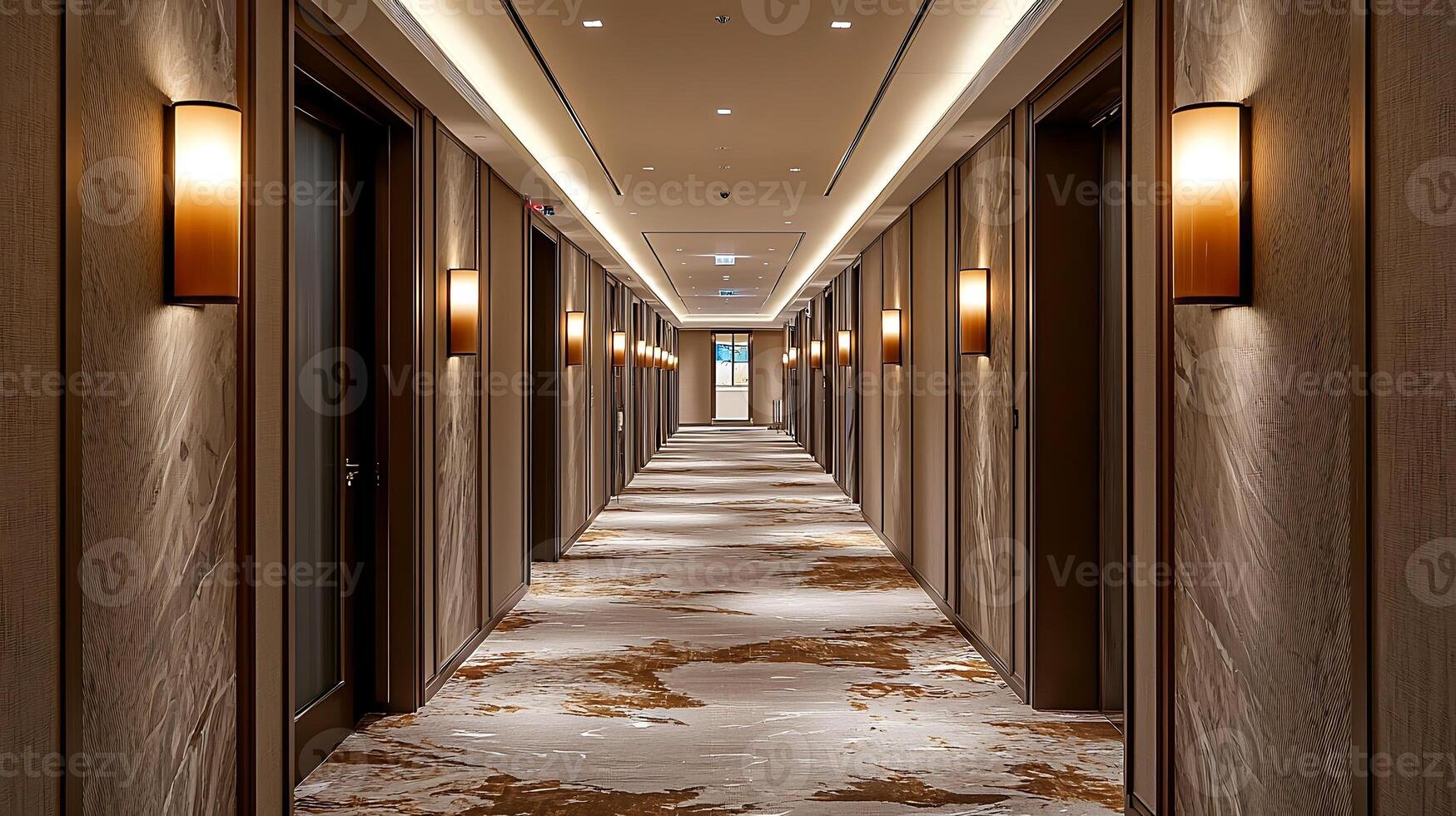
Phased installation is where loose lay creates the biggest operational advantage. Instead of closing an entire floor or wing, the installation can proceed room-by-room or zone-by-zone while adjacent spaces remain in full service. We have completed hotel corridor renovations in Nashville where one side of the hallway was being installed while guests walked the other side—with no dust, no adhesive fumes, and no disruption to their stay.
Multifamily unit turnovers benefit from the same dynamics. Property managers dealing with tenant transitions typically have a 3- to 7-day window between move-out and move-in. During that window, the unit needs cleaning, painting, repairs, and potentially new flooring. With glue-down installation, flooring alone can consume 2 to 3 of those days. Loose lay flooring can be completed in under a day for a typical apartment unit, freeing the remaining time for other turnover tasks.
Worship facilities present a different version of the same challenge. A church fellowship hall hosting Sunday services, Wednesday night dinners, and a Saturday community event has no multi-day windows available. Loose lay installation can be completed during a Monday-through-Thursday window, with the space fully functional for Friday setup. We have installed flooring in active worship spaces in Murfreesboro and Nashville without canceling a single scheduled event.
The cost of delayed turnover is not always obvious. Beyond lost room revenue in hotels or rent loss in apartments, there are cascading effects: event cancellations, temporary relocations, staff overtime for compressed timelines, and guest satisfaction impacts that show up in online reviews months later. When flooring creates the bottleneck in a renovation timeline, the true cost is multiples of the material price.
Speed should not come at the expense of quality. Fast installation only saves money if the floor performs correctly for its full expected lifecycle. That is why subfloor preparation cannot be skipped even when the installation method allows rapid placement. At 180 Degree Floors, we maintain the same surface preparation standards—ASTM F710 flatness tolerances, ASTM F1869 and F2170 moisture testing, and proper crack repair—regardless of whether the finished floor is loose lay or glue-down.
The takeaway for facility managers evaluating flooring options: model the total cost of the renovation timeline, not just the material and labor invoice. When you factor in lost revenue, operational disruption, and the flexibility to maintain service during installation, the flooring system that minimizes downtime almost always delivers the best financial outcome.
If you manage a hotel, multifamily property, worship facility, or event venue across our Tennessee and Alabama service area, we can walk your space and model the installation timeline for your specific layout and operational constraints. That conversation starts with a site walk, not a sales pitch.
Related Services
180 Degree Floors & Moore — Commercial Division
Schedule Site Walk